
Ort: Seminarraum Forschung I (im Bibliotheksbau)
Link zur Online Teilnahme:
Beitreten Zoom Meeting:
https://zoom.us/j/7543392022?pwd=idcp61CSSfxbZPHaNZaNqpKakOngRH.1&omn=94073510221
Meeting-ID: 754 339 2022
Kenncode: 624841
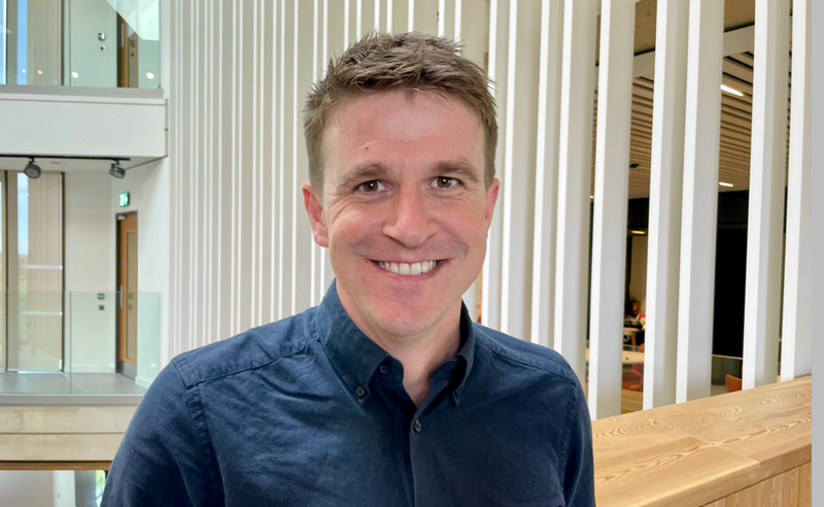
Bild: Thomas Simpson
Hier finden Sie einen kurzen CV von Dr. Thomas Simpson, Reader in Environmental History im
History Department, University of Warwick
Planetary Histories of Science and Making Global Temperature
Global Mean Surface Temperature (GMST) is the primary metric of climate science, policy, and public communication in our age of anthropogenic climate change. Yet internalist histories of climate science—such as that provided in the latest Assessment Report of the Intergovernmental Panel on Climate Change (IPCC)—tell a reductive tale of the emergence of climate science, focusing on a narrow cadre of Euro-Western men and their theoretical breakthroughs. Drawing on the collaborative ‘Making Climate History’ project at the University of Cambridge, this paper proposes a very different story. It shows how notions that the globe has a single temperature, and the many of the data infrastructures required to realise this metric, are products of expansionary European empires in the long nineteenth century. Telling a history of global temperature from the peripheries—mountain heights, oceanic depths, and extractive and sovereign frontiers—prompts vital reflections on the capacities and limitations of GMST as a bearer of scientific truth and political action.
Building on this account of the construction of global temperature, the paper offers preliminary reflections on the promises and pitfalls of doing planetary histories of science. Invoking the planetary foregrounds two critical elements widely overlooked in global histories of science. First, ‘global’, ‘planetary’, and a host of related terms are not just our own analytical categories, but also concepts proposed, criticised, performed, and reconfigured by our historical scientific actors. Second, the lively, agentive, uncanny qualities of environmental processes and (hyper)objects—alluded to in Dipesh Chakrabarty’s dictum ‘the word globe [in] globalization is not the same as the word globe in […] global warming’—crucially inflect scientific knowledge and categories. Doing planetary histories of science, the paper concludes, is essential to meeting both the epistemological and ethical challenges of the Anthropocene.