
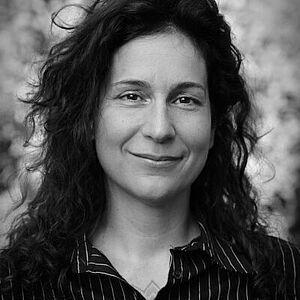
Dr. Barbara Hof
ForschungsinstitutScholar in Residence
E-Mail b.hof.ext@deutsches-museum.de
E-Mail barbara.hof@unil.ch
Zeitraum: 13. April bis 12. Mai
Technologies of Exchange: An Artifact-Oriented Approach to International Collaboration in Physics During the Age of Ideological Disruption
Experimental apparatuses were powerful yet underexplored drivers of international collaboration in late twentieth-century physics. From accelerators and detectors to computers and data-handling systems, instruments did far more than produce results: they organized labor and defined the practical conditions under which physicists could collaborate across institutional and national boundaries. During my Scholar-in-Residence, I will work on a project that places material culture and infrastructure at the center of the history of scientific exchange, recasting collaboration as a process fundamentally shaped by technology.
The Deutsches Museum’s research library offers an extraordinary foundation for this work. Its unparalleled holdings of rare publications on experimental techniques, apparatuses, and laboratory practices are essential for reconstructing how collaboration functioned on the ground. These sources illuminate key developments in physics between the 1970s and 1990s while revealing the experiments and institutions that shaped them, enabling a materially grounded history of international collaboration.
Short bio:
Barbara Hof is a postdoctoral researcher at the University of Lausanne and a guest lecturer at the Leuphana University Lüneburg. Since August 2025, she has been the external expert recommending materials to be digitized from the CERN Archives. She holds a PhD from the University of Zurich (2021).
Her work has been recognized with the ISCHE Early Career Conference Paper Award in History of Education (2018) and the IUPAP Early Career Prize in History of Physics (2025). She is currently completing studies that develop new perspectives on the history of science and technology. Her forthcoming book (Oxford University Press) will be a key outcome of this work.