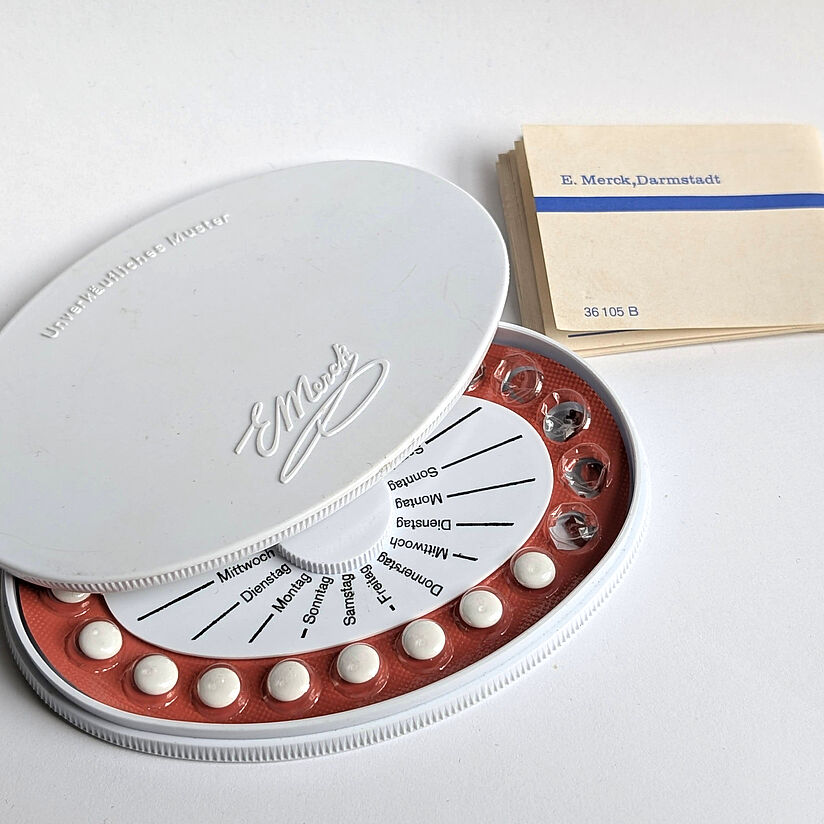
In 1960, chemists at the pharmaceutical company Merck in Darmstadt developed the synthetic sex hormone chlormadinone acetate and filed a patent for it. In 1965, Merck introduced the active ingredient in combination with mestranol to pharmacies as the "birth control pill" Aconcen (which actually contained coated dragées), soon competing with Schering and Parke, Davis & Co. in the nascent market for hormonal contraceptives. By 1970, it had reached a market share of around 8%.
However, long-term animal testing with chlormadinone acetate in 1970 revealed abnormalities: dogs (beagles) given a dose 10 to 25 times higher than the standard human dose developed benign nodules in their mammary tissue in some cases. Other animal species, such as rats, mice, and monkeys, showed no tissue changes whatsoever, even after receiving 10 to 50 times the human dosage over a period of 29 months.
Despite these contradictory study results, Merck voluntarily withdrew Aconcen from the market that same year (1970) as a precautionary measure. Although those initial concerns later proved to be unfounded, Merck simultaneously ceased all activities in the field of sex hormones. Today, chlormadinone acetate is once again used in several common birth control pills and is considered very safe.
This object is a sample pack (not for sale); 10 of the original 21 dragées remain intact.