Photo: Deutsches Museum
Natural Sciences
Classical Optics – Bringing the world into focus
With around 20 hands-on stations and several push-button experiments, you can discover and experience the principles and applications of the science of light.
Here’s what you can expect to see in the exhibition:
Optics, a branch of physics, is the study of light. We encounter optical phenomena and effects the moment we open our eyes: some are quite commonplace, such as our reflection in a mirror, dark shadows or the evening glow; others are rarer, such as a rainbow or a mirage. We therefore perceive light through our sense of sight – the sense that is usually the first to provide us with information about our surroundings. It therefore stands to reason that the study of light and its properties has always been of great importance to humankind.
The exhibition ‘Classical Optics’ presents, across four sections, the fundamentals and applications of the science of light from antiquity to the early 20th century. To begin with, selected milestones in the history of optics are displayed in three display cases (dioramas). Next, in the Microscopic Theatre, regular demonstrations invite visitors to ‘raise the curtain on the world of the tiny’. Here, tardigrades, predatory mites and marine plankton take centre stage. Surrounding this is the large hands-on area, focusing on geometric optics and wave optics. Touching and trying things out is expressly encouraged here! Around twenty interactive tables and ten push-button experiments invite visitors to explore and understand optical phenomena.
Highlights
Die Schatzkammer optischer Instrumente: Mikroskope, Spektroskope, Fernrohre, Messinstrumente und Optische Bauteile. Photo: Deutsches Museum | Reinhard Krause
A treasure trove to amaze and inspire
The treasury of optical instruments houses the most valuable treasures in our optics collection – including two very rare microscopes, some 300 years old, belonging to the ‘father of microbiology’, Antoni van Leeuwenhoek (1632–1723). Or Joseph von Fraunhofer’s prism spectroscope, with which the Fraunhofer lines were discovered. And an optical gravimetric analyser by Carl August Steinheil from 1842, which was used to determine the alcohol and malt content of Munich beer.
Sophisticated technology, artistic design and surprising functions: in the treasure trove, you will find the unusual, the mysterious and the unknown. From classic microscopes to unusual mirrors, these objects showcase the multifaceted diversity of optical and precision engineering craftsmanship spanning several centuries.
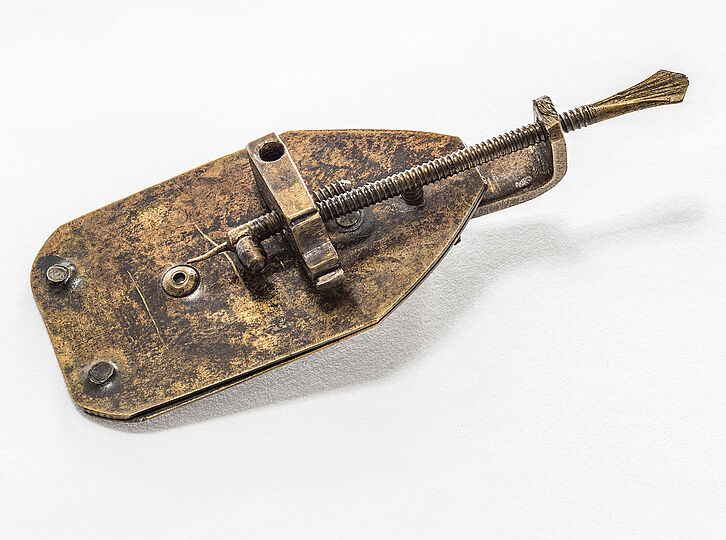
Das Originalexemplar eines einfachen Mikroskops von Antoni van Leeuwenhoek aus der Zeit um 1700 wird in der Ausstellung Klassische Optik präsentiert. Das aus Messing gefertigte Instrument (Inventarnummer 6768) wird hier von der Seite gezeigt, auf der das zu untersuchende Objekt fixiert und vor die Linse gedreht wird. Photo: Deutsches Museum, Hubert Czech
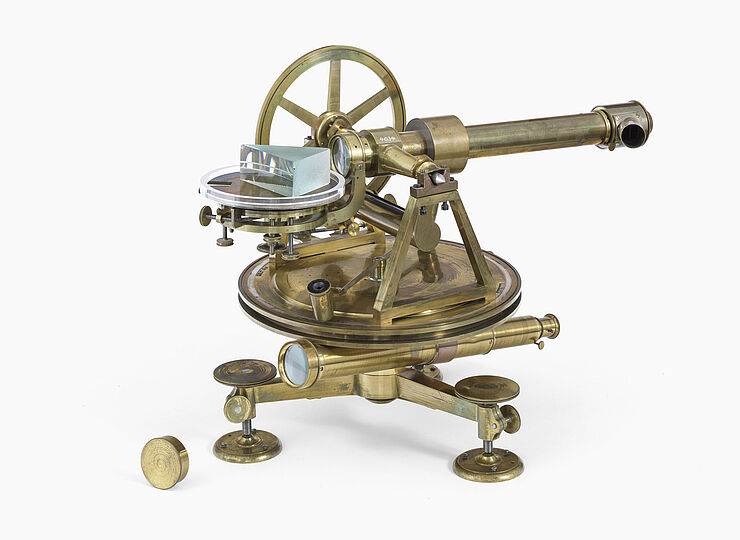
Prismenspektralapparat, Inv.Nr. 4034. Photo: Deutsches Museum | Konrad Rainer
“Each of the 200 objects has its own story to tell. Eight key exhibits are given special prominence. They recount the origins and development of scientific fields within the discipline of optics.”
Tardigrades, barely a millimetre in size, can withstand a vacuum, survive high pressures and extreme sub-zero temperatures, and can go without water for years. Photo: Deutsches Museum
The Microscopic Theatre
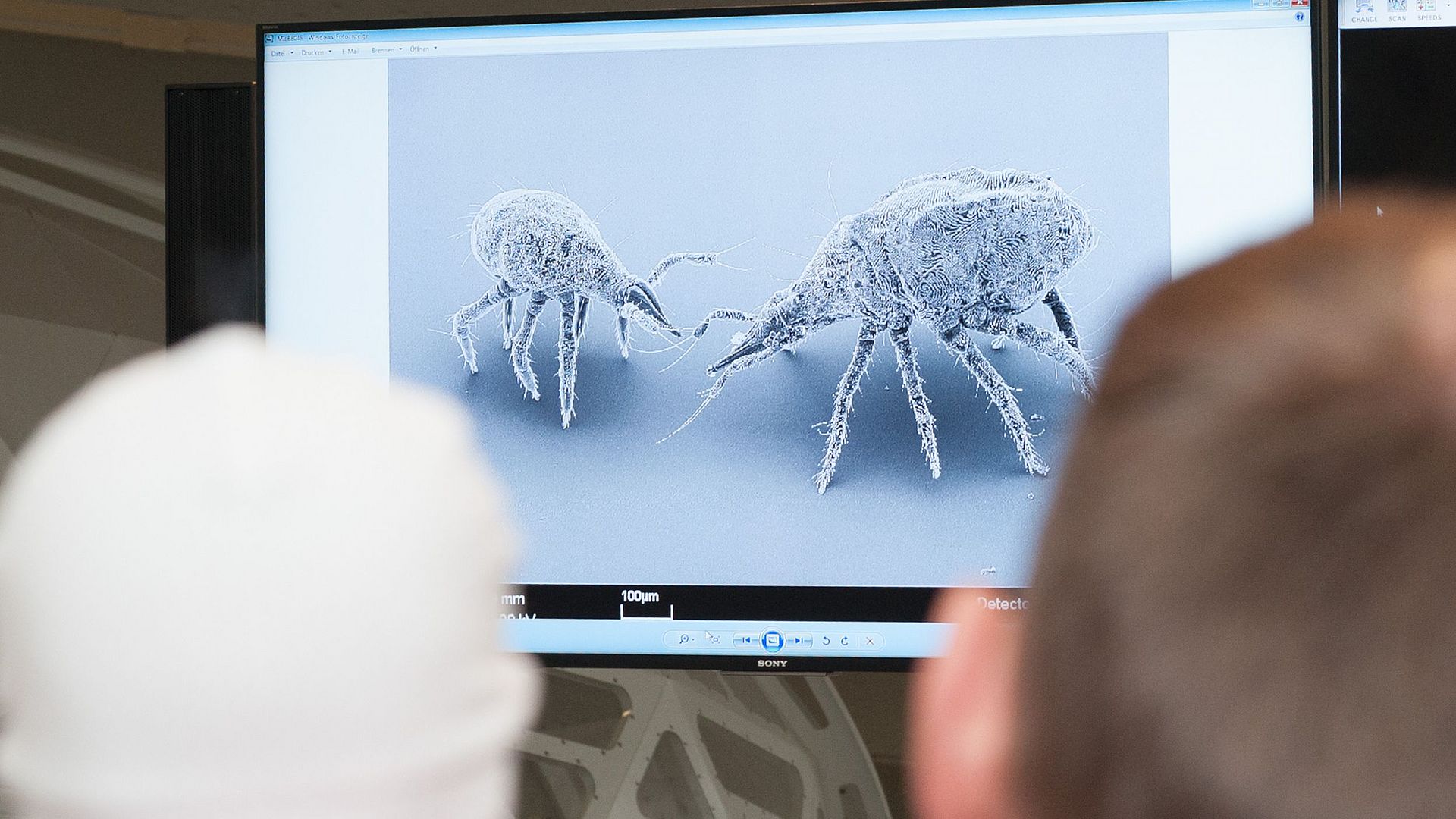
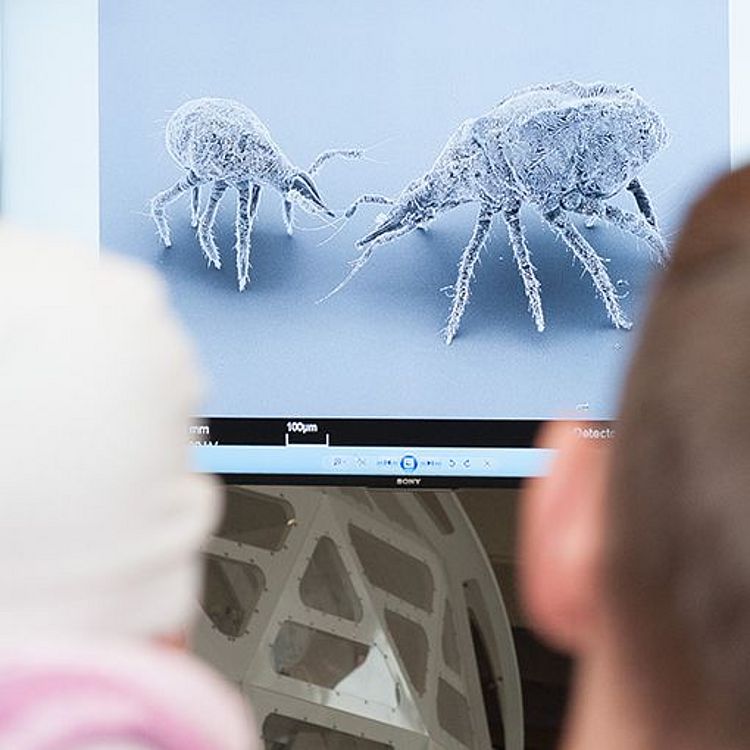
Curtain up on the world of the tiny: at the Microscopic Theatre, regular performances offer fascinating insights. A modern electron microscope, alongside a conventional light microscope, reveals minute details of tiny samples. The infinite variety of shapes found in pollen and marine plankton, the hairy legs of a predatory mite, or even living tardigrades are then clearly visible to all on the three large screens above the theatre.
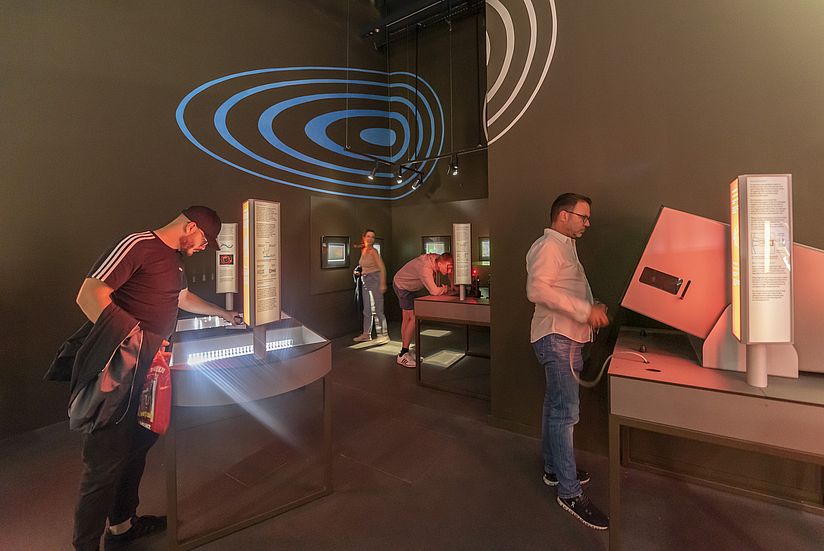
Mitmachstationen laden ein, mit den eigenen Händen optische Phänomene zu erkunden. Photo: Deutsches Museum, Hubert Czech
Highlight: Understanding optical phenomena
Experience, touch and understand: Exciting hands-on stations invite you to explore selected optical phenomena with your own hands: Cast colourful shadows, create your own rainbow or find out how a telescope and a microscope work.
A selection of the hands-on stations:
- Polarisation – light that rotates
- Scattering – tiny particles with a big impact
- Camera Obscura – Upside down! From images to photography
- Interferometer – Can warm air be made visible?
Facts and figures
- Location: Level 1
- Exhibition area: approx. 300 square metres
- Demonstrations and interactive displays: 30
- Dioramas: 3
- Media stations: 2
When will this event take place?
Discover which activities are taking place by checking our daily programme, which is published at around 9.20 each day. Our programme changes daily and includes guided tours, demonstrations, science shows and hands-on activities for individual visitors and small groups of up to five people. All programme events are held in German. They begin either directly where the activity is set to take place or at a guided-tour meeting point in the relevant exhibition.
Supporting materials and publications
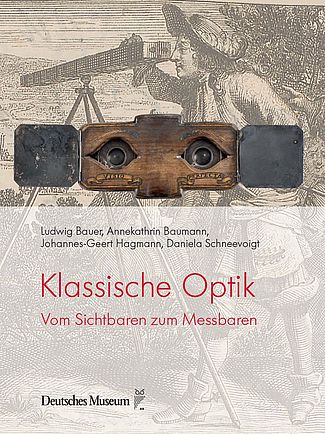
A glimpse into the ‘Classical Optics’ exhibition
The Microscopic Theatre in the ‘Classical Optics’ exhibition
Curator Johannes-Geert Hagmann presents the Microscopic Theatre at the Deutsches Museum. A film by ZEISSMicroscopy.


You have specialist questions for our curator?
![Eine Person mit verwaschen verschwommenem Gesicht (absichtlich unkenntlich gemacht), schulterlangem zurückgebundenem Haar und Bart, trägt ein rosafarbenes Hemd vor einer grünen Wand mit einem bunten horizontalen Farbstreifen und Ausstellungs- oder Informationsschildern im Hintergrund.]()
M.Sc. Eckhard Wallis
Acting curator
Optics and Academy Collection DepartmentDeutsches Museum
80306 MunichTelephone +49 892179 350
Fax +49 892179 99350
Email e.wallis@deutsches-museum.de