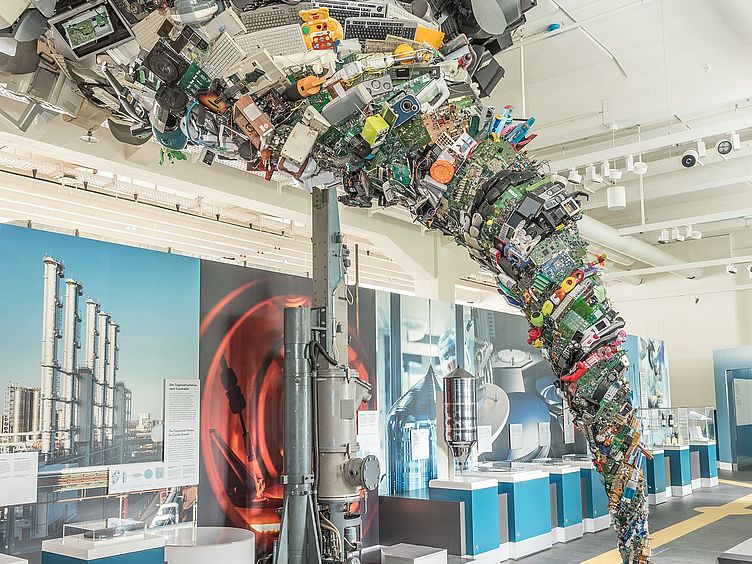
Permanent exhibition from 2028
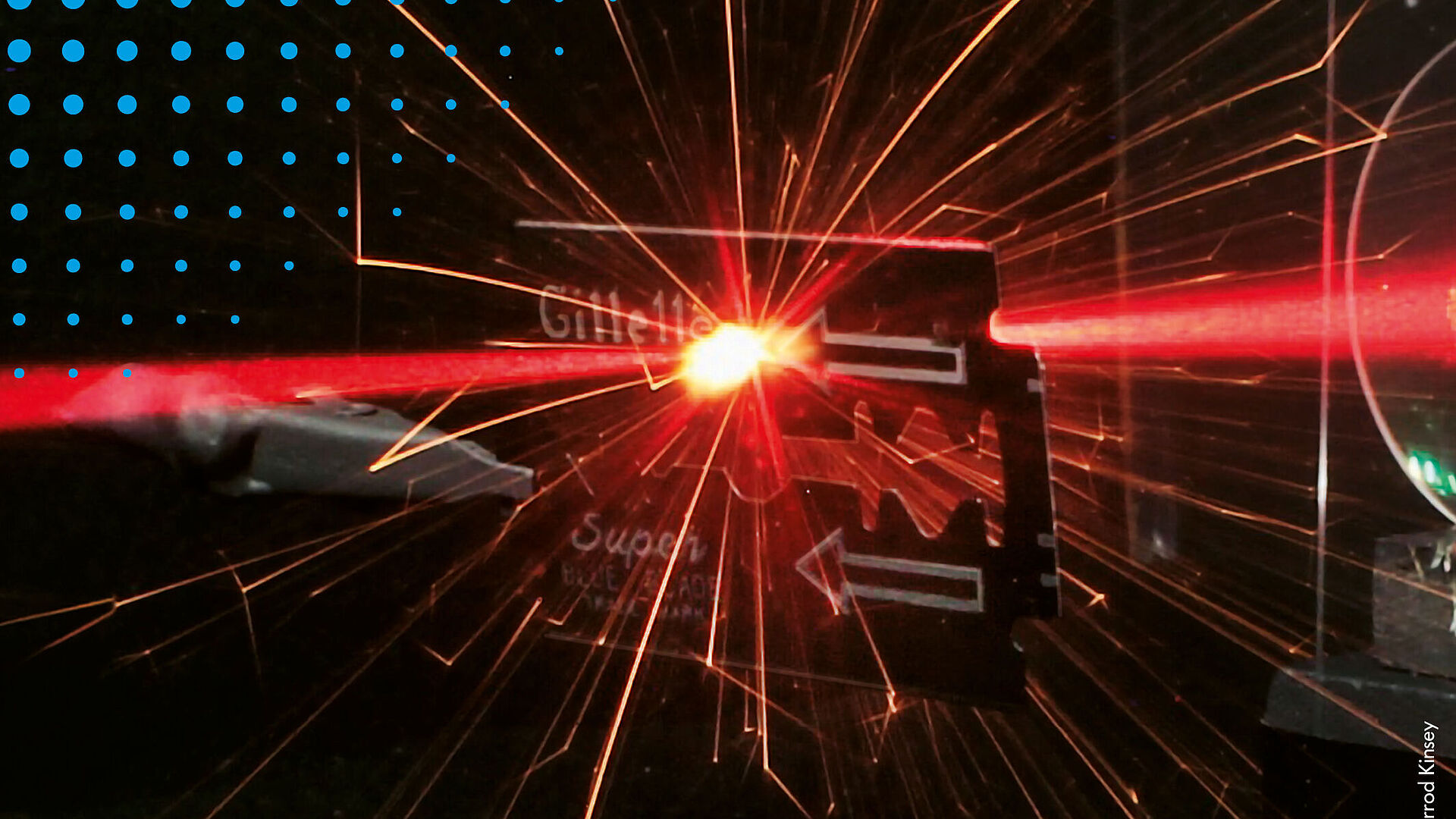
Photo: Jarrod Kinsey
In cooperation with the "Munich Center for Quantum Science and Technology"
Light and matter
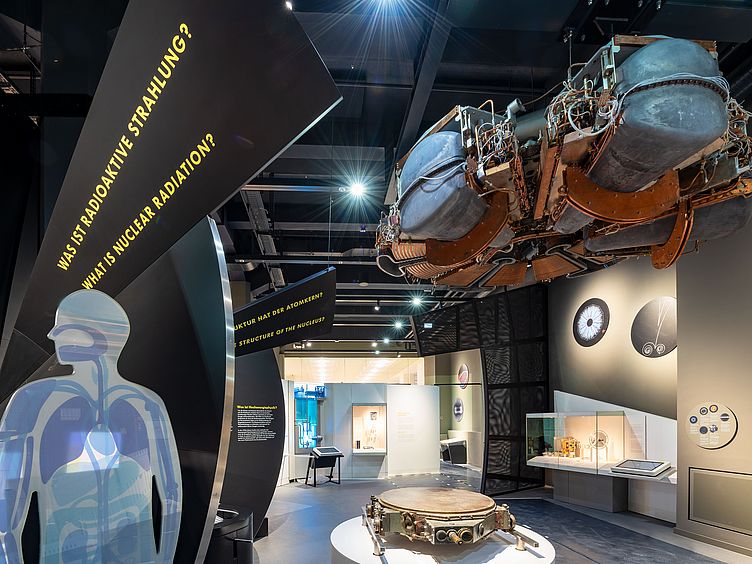
The exhibition "Light and matter" presents the fundamentals of quantum optics and shows how our understanding of light and matter has changed over the past century. These new insights form the basis of the quantum sciences and quantum technologies that are being intensively researched today.
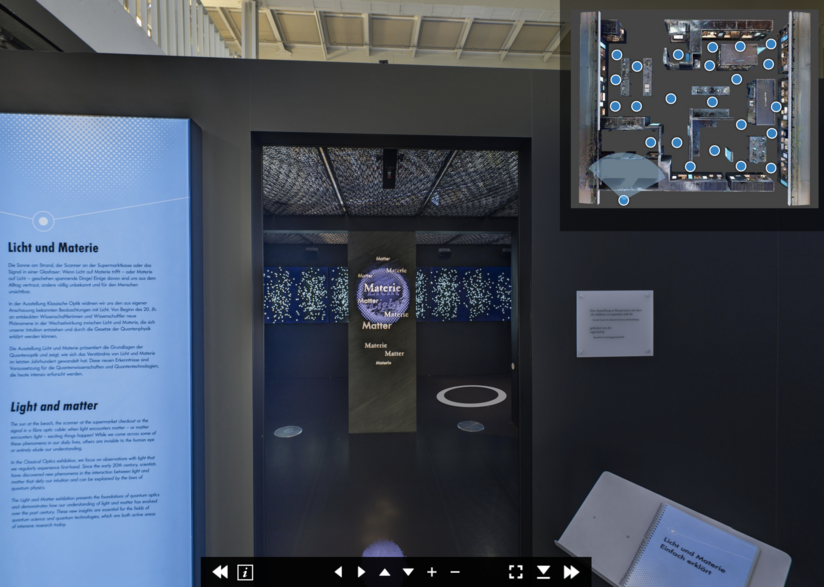
Site plan of the exhibition at the top right and controls for the tour at the bottom of the browser window. Photo: Screenshot Virtualtour, Deutsches Museum
Virtual tour
The "Light and matter" exhibition can be discovered online in the virtual tour. Simply open it in your browser and navigate through the various subject areas. Numerous demonstrations on quantum physics and quantum optics are available as videos.
Enjoy your virtual visit to the exhibition.
Screenshots from the virtual tour
Discovering the secrets of light and matter
From the scanner at the supermarket checkout to high-speed internet surfing through fibre optic cables: developments from quantum physics have long been part of our everyday lives and are widely used. In the special exhibition "Light and matter", quantum optical phenomena are illuminated and made tangible. With numerous objects, in scenoramas and above all at many hands-on stations, it demonstrates how the understanding of the interaction between light and matter has evolved over the last century. As part of the Cluster of Excellence Munich Centre for Quantum Science and Technology (MCQST), the exhibition also offers an insight into current research and an outlook on future applications.

The entrance area of the special exhibition displays the famous double-slit experiment. Photo: Deutsches Museum, Reinhard Krause
Waves and particles
At the entrance to the exhibition, visitors can already see what makes the physics of light so fascinating. Upon entering, they experience one of the key experiments of quantum optics – the double-slit experiment – from the perspective of a beam of light. The exhibition then takes visitors on a journey through the 20th century, from the first experiments with electromagnetic waves to today's research laboratories. Exploring the interaction between light and matter is the key to the development of quantum physics in the early 20th century, as well as to understanding today’s quantum technologies.
The scenorama tells the story of Alice Golsen, a Jewish woman born in Wiesbaden in 1889. She attended Germany's first girls' grammar school, studied physics and mathematics, and began her doctoral thesis at the University of Frankfurt in 1920. As a Jew, she was forced to flee her German homeland in 1939. She committed suicide in Great Britain in 1940. Photo: Deutsches Museum, Reinhard Krause
Scenarios of the invisible
"Light and matter": this is a centuries-long history of physicists with many elaborate experiments and discoveries, complicated theories and formulas."But this story also includes many fascinating, and in some cases tragic, stories of people," says Eckhard Wallis. The employees of the workshops at the Deutsches Museum have masterfully depicted this history in six large scenoramas. Shown here is the scenorama that tells the story of the scientist Alice Golsen (1889–1940). In 1923, she succeeded in making the first precise measurement of the radiation pressure of light. Her remarkable yet tragic life, however, remained overshadowed by other personalities.
Picture gallery – Special exhibition "Light and matter"
Video
Curator's tour through "Light and matter" (in the German language)
In this video, curator Eckhard Wallis guides us through the five thematic areas of the special exhibition "Light and matter": "What is light", "Spectroscopy", "Lasers", "Quantum Physics" and "MCQST Module".
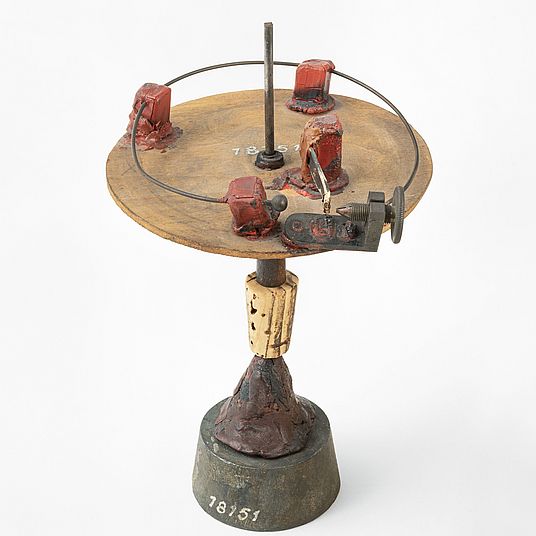

What is light?
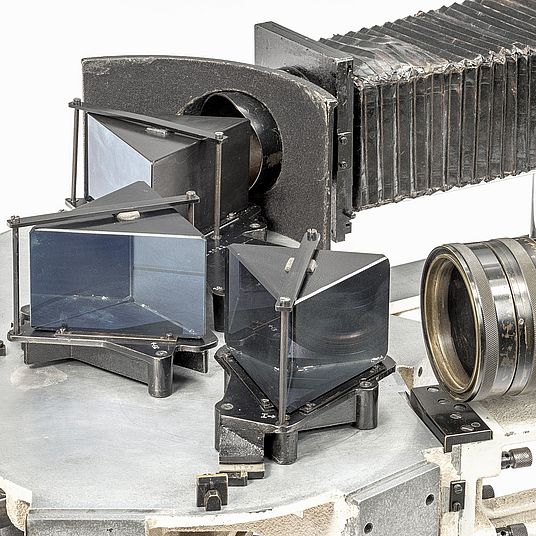
Although light is part of everyday life, it is not so easy to explain what it is. Over the course of time, there have been different ideas about light. The exhibition area "What is light?" shows which experiments and models form the basis of today's understanding of light. The focus is on the two model images of light as a wave and as a particle.
Spectroscopy
When light and matter meet, the most diverse things can happen: Transparent materials are irradiated, others absorb the light or reflect it and still others are excited to glow.
On a microscopic level, light and matter behave in a similar way to musical instruments and sound waves, which can excite each other to vibrate. Spectroscopy investigates which oscillation frequencies ("pitches") matter reacts to. Not only is our current understanding of the structure of atoms based on this knowledge, but also all modern technology for controlling frequencies and measuring time.
Laser
Tool enters research and technology. The word laser is an acronym for "light amplification by stimulated emission of radiation". It is used in research, manufacturing, medical technology and communication.
It is also impossible to imagine pop culture, especially science fiction, without lasers in the form of laser pistols, laser swords and other laser weapons, even if many of these are a far cry from today's laser applications.
Quantum physics of light
At the beginning of the 20th century, quantum physics created a completely new description of nature. According to it, energy is always transferred in small, indivisible portions - the quanta. Quantum physics correctly describes many phenomena, for example the relationship between light colour and temperature in glowing bodies, the line spectra of luminous gases or the processes in a laser.
However, quantum physics predicts very unusual behaviour for individual atoms and light quanta, which was initially only investigated in thought experiments and theories. Only since the 1970s has it been possible to study quantum objects directly in the laboratory.
MCQST module
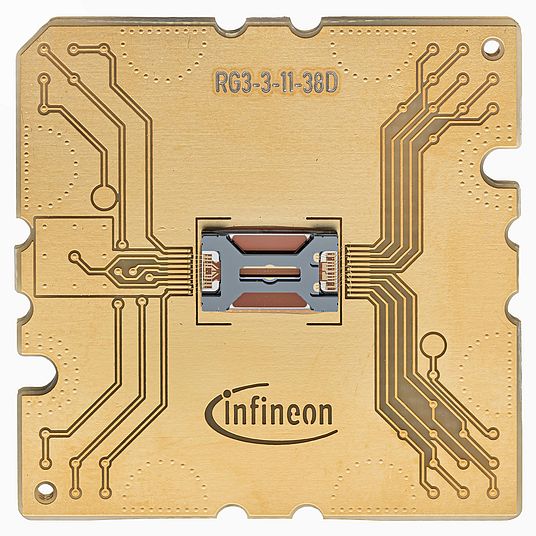
The Light and matter exhibition was created as part of the Cluster of Excellence Munich Center for Quantum Science and Technology (MCQST), which has been funded by the German Research Foundation since 2019. MCQST researchers are developing new protocols for secure communication, devising algorithms for computing with quantum bits and investigating the properties of new materials. Controlling the interaction of light and matter is one of the approaches to working with quantum systems.
In this last area, you can interact with MCQST scientists via an interactive video station and a postcard station.
The exhibition “Light and matter” developed in cooperation with the Cluster of Excellence “Munich Center for Quantum Science and Technology” (MCQST).
You have specialist questions for our curator?
![Eine Person mit verwaschen verschwommenem Gesicht (absichtlich unkenntlich gemacht), schulterlangem zurückgebundenem Haar und Bart, trägt ein rosafarbenes Hemd vor einer grünen Wand mit einem bunten horizontalen Farbstreifen und Ausstellungs- oder Informationsschildern im Hintergrund.]()
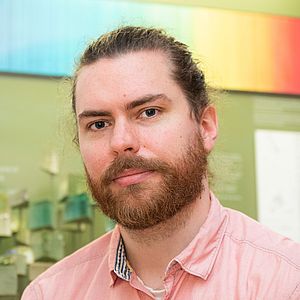
M.Sc. Eckhard Wallis
Acting curator
Optics and Academy Collection DepartmentDeutsches Museum
80306 MunichTelephone +49 892179 350
Fax +49 892179 99350
Email e.wallis@deutsches-museum.de![Schwarzweiß-Porträt eines Mannes im Anzug mit verdecktem Gesicht; sichtbar sind dunkle, leicht wellige Haare, Ohren, Hemd mit feinem Karomuster und dunkles Sakko vor hellem Hintergrund.]()