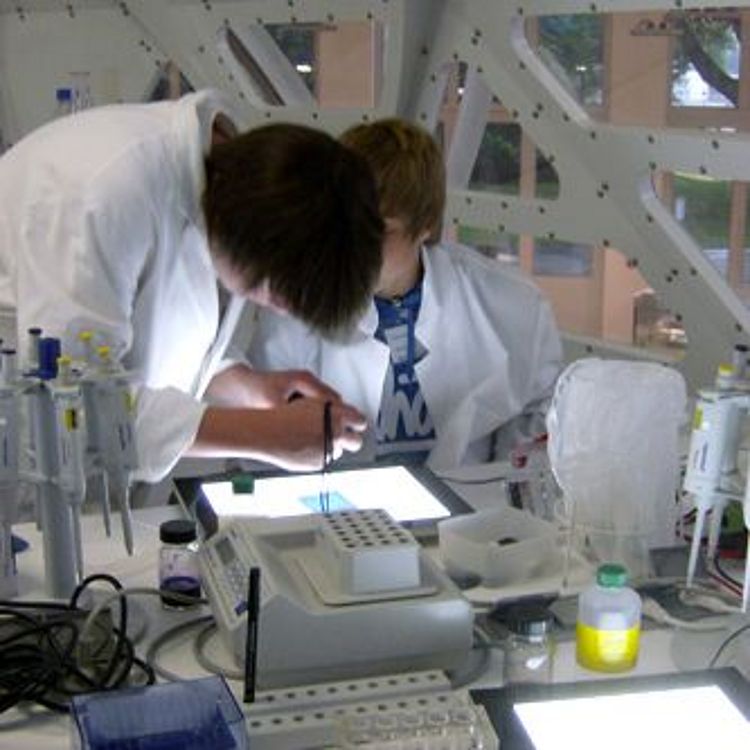
DNA samples from four "suspects" and one "crime scene" are analysed using the PCR method also used in modern forensics. After the DNA has been amplified using PCR, the "perpetrator" is identified on the basis of his genetic fingerprint, which matches the crime scene sample. We achieve this in the course using gel electrophoresis with subsequent colouring of the DNA.
Booking
![]()
Besucherservice
Your contact team for any questions about visiting our Munich locationsMuseumsinsel 1
80538 MünchenTelephone +49 89 2179 333
Email visitorservice@deutsches-museum.deWe are available for you:
- Monday to Thursday from 9 a.m. to 3 p.m.
- Friday from 9 a.m. to 12 p.m.

Technical queries
![Vorderansicht einer Person mit nach hinten gebundenem dunklem Haar; Gesicht durch einen unscharfen Kasten unkenntlich gemacht, sichtbare Ohren und Hals, sie trägt einen bordeauxfarbenen Schal mit weißen Punkten und ein dunkles Oberteil vor hellem Hintergrund.]()
Dr. Margherita Kemper
Kuratorin
Abteilung Life SciencesTelephone +49 89 2179 551
Fax +49 89 2179 99350
Email m.kemper@deutsches-museum.de