
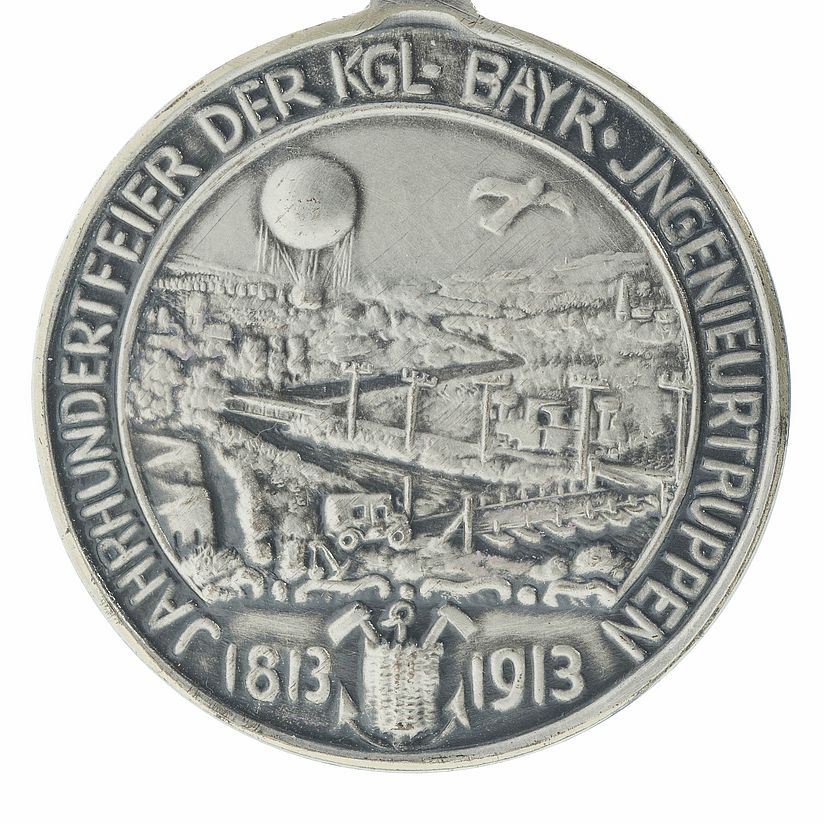
Photo: Deutsches Museum
Medals and Commemorative Coins
The special collection of around 4,400 medals, commemorative coins, badges, insignia and counting tokens relating to the natural sciences and technology is one of the most significant of its kind in Europe.

[Translate to English:] Zeppelin, Ferdinand Graf von (1838-1917) Erfinder des Starrluftschiffes, Relief (Material: Kupferblech), Signatur: MD 2790. Photo: Deutsches Museum
About the Collection
The collection was continuously expanded until the 1990s. In archival contexts, such self-contained, closed collections are relatively rare. The structure and makeup of the medal collection at the Deutsches Museum are closely tied to the museum’s founding vision: paying tribute to prominent scientists, technicians, and engineers alongside their achievements.
For the most part, these pieces were crafted to commemorate significant events, to serve as awards, or to honor notable individuals. The collection ranges from Roman imperial coins featuring bridge-building motifs to modern commemorative strikes marking the first moon landing and other space missions. A major portion consists of portrait medals depicting scientists and engineers, often crafted by renowned medalists. In many cases, these medals were not produced contemporaneously, but were struck at later dates to commemorate historical events, typically on the occasion of anniversaries.
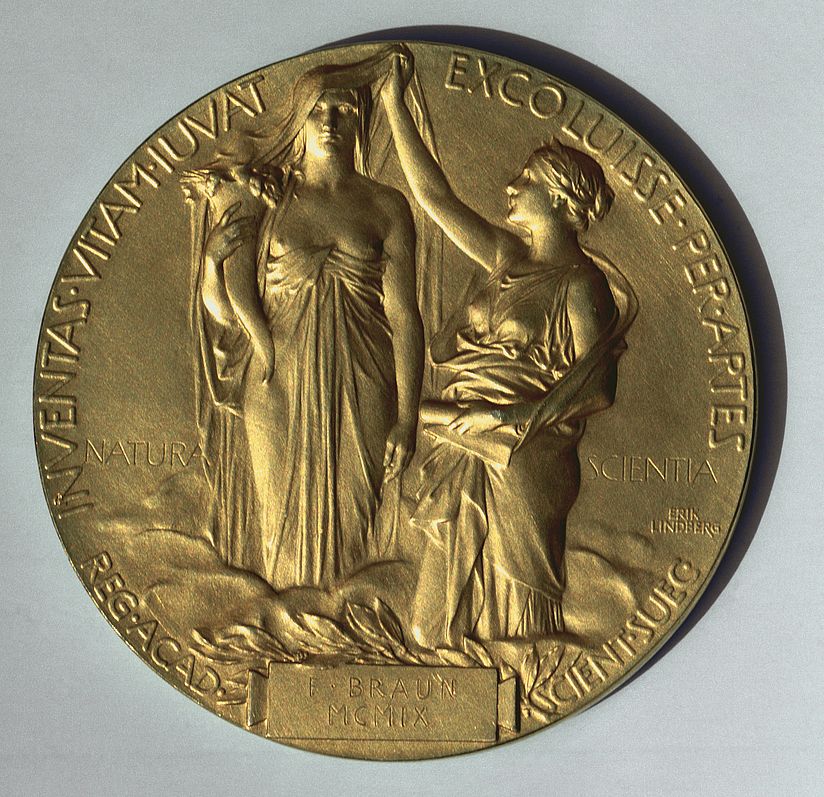
[Translate to English:] Nobelmedaille für den Physiker Karl Ferdinand Braun (1850-1918), 1909. Signatur: NL 003/002. Photo: Deutsches Museum
Key Thematic Areas
- Transport
- Railway construction
- Shipbuilding
- Aviation
- Bridge and tunnel construction
The best-known medals are the Nobel Medals, awarded annually to distinguished researchers. Since the first Nobel Prize was awarded in 1900, the medals have remained unchanged.