Photo: Deutsches Museum | Christian Illing
Body and Mind
Will Man and Machine Become One?
New technologies fulfil age-old dreams of mankind: no more diseases, no more ageing, perhaps eternal life.
At the same time, however, the technical possibilities also create frightening visions of optimised fellow human beings, genetically manipulated babies and cyborgs. How do we reconcile this as a society? Where is the trend of fitness trackers taking us? What happens when medical institutions receive our health data live? Will medically necessary prostheses and implants turn a person into a cyborg? With the help of many hands-on stations, the exhibition area conveys modern medical technology and biotechnology, outlines the advantages and disadvantages and gets to the bottom of the question of what actually makes a human being. At the end, visitors decide for themselves how far we really are from the Medical Tricorder from the sci-fi series "Star Trek", which is also on display.
Insights
Body & Mind – Being Human in the Age of Self-Optimisation
What is a “natural” body? And who decides what is normal?
The exhibition area “Body & Mind” explores how technology is changing our understanding of what it means to be human. Artificial organs, genetic diagnostics and gene technologies, implants and digital health data are no longer science fiction. They already shape medicine, research and everyday life.
Today, medical progress means more than healing. It promises optimisation: more precise diagnoses, tailored therapies and perhaps even the possible interventions in the human genome before birth. Terms such as personalised medicine, genetic engineering and brain-computer interfaces represent developments that intervene deeply in the body and identity.
Personalised medicine adapts treatments to individual data, such as genetic information or continuously recorded health metrics. Gene technologies such as CRISPR/Cas make it possible to alter DNA in a targeted way. Implants and prostheses extend or support the body technologically.
Human beings combine body, mind and culture. But when body data is constantly measured, analysed and optimised, our self-image changes. Do we still see ourselves as purely human, or have we already become hybrid beings made up of organism and technology?
With every new possibility come new questions.
Who is allowed to access health data, and for what purpose? Could voluntary genetic optimisation one day become a social obligation? When does technology heal, and when does self-optimisation begin?
If organs could be “printed”, would that change the way we think about illness, ageing or vulnerability? If fitness data determines partner choices, do algorithms then decide intimacy and relationships?
And ultimately: what happens if not only our bodies, but also our thinking, becomes technologically controlled?
The exhibition invites its guests to take a position within the tension between medical assistance, economic interests and ethical boundaries.
The exhibition area makes medical and technological developments tangible
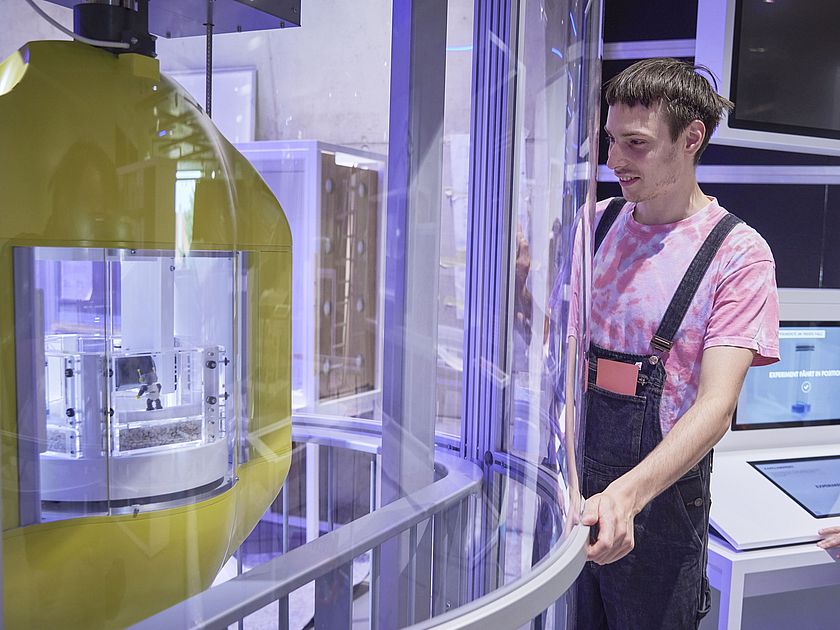
What does it feel like when fitness determines relationships, organs are created in laboratories, or your own reflection becomes a machine? “Body & Mind” combines scientific exhibits with interactive stations and possible future scenarios. Visitors listen, watch, scan, decide and physically experience just how close future technologies already are.
Fall in love at your level
The “Love Bikes” station presents a fictional scenario in which partner selection depends on fitness data. Those who cycle longer supposedly receive “better” matches. The game raises a serious question: what happens when personal health data becomes a form of social currency? Visitors experience first-hand how quickly data collection turns into evaluation.
Move through the inside of the body
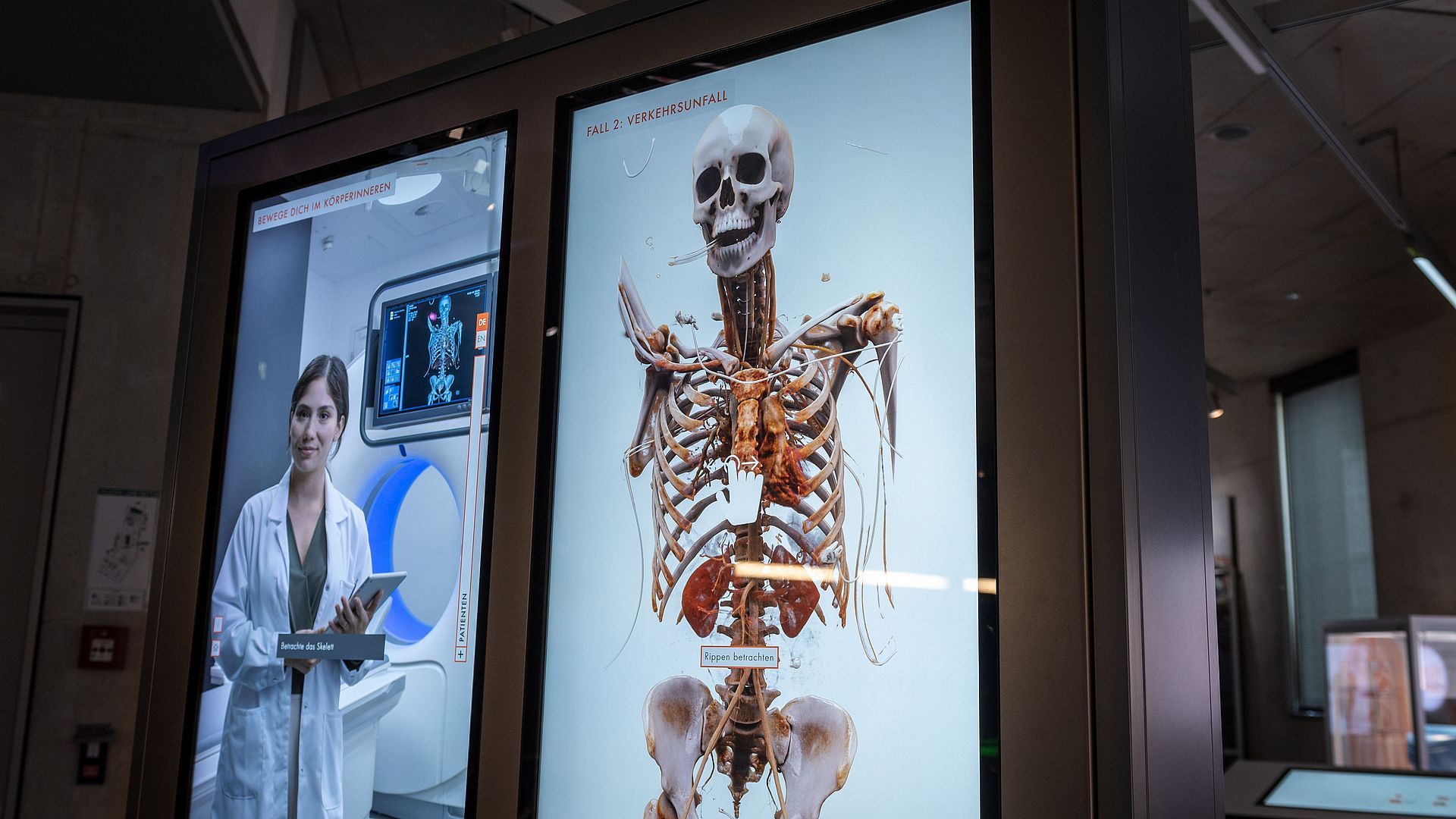
“Cinematic Rendering” enables a virtual journey through the human body. CT and MRI data appear so realistic through cinematic techniques that structures seem almost tangible and three-dimensional. The technology is already used in training, diagnostics and surgical planning. The exhibition shows how clinical scans are transformed into striking images and how strongly visualisation technologies shape our perception of the body.
Alter genes with CRISPR/Cas?
This station demonstrates clearly how targeted DNA modification works. The method is fast, comparatively inexpensive and precise, creating new opportunities in plant and animal breeding. Heritable genome editing in humans remains highly restricted or prohibited in many countries. Yet the exhibition illustrates how closely vision and reality are converging, for example in debates surrounding prenatal interventions.
Printed organs
A “bioprinter” presents the vision of genetically compatible organs “made to order”. First, it prints a biological scaffold. Inside a bioreactor, cells populate this scaffold and form tissue. Fully printing complex organs remains a challenge. But the exhibition demonstrates how far research has already progressed and the hopes it inspires.
Are you already a cyborg?
Implants such as pacemakers, copper IUDs or RFID chips prove that technological interventions in the body have long been part of everyday life. The exhibition asks provocatively: are we not already cyborgs? Visitors reflect on how naturally technology already complements their bodies — and where they personally draw the line.
Medical innovation connects body and mind while fuelling social debate. The exhibition does not look towards a distant future, but towards developments that have already begun.
In the end, there is no simple answer, only a question: how do we want to live? How much technology are we willing to allow? And what does it mean to be human in the age of self-optimisation?
At the Deutsches Museum Nuremberg – the Museum of the Future, this decision is not made for visitors, but made visible, open to discussion and tangible.