Photo: Daniel Karmann | Daniel Karmann
Relaxed and well-informed
Welcome to the Museum of the Future Nuremberg
Experience the world of tomorrow today. Find out how to plan your visit and discover our highlights.


Deutsches Museum Nürnberg -The Museum of the Future
Located in the heart of Nuremberg’s historic city center, Deutsches Museum Nuremberg – the Museum of the Future explores what our lives might look like in the coming decades. Across approximately 2,900 square meters and four floors, more than 250 exhibits from research, science, and industry come together in an interactive exhibition. Five thematic areas guide visitors into the future of work and everyday life, explore the connection between body and technology, examine smart cities and new mobility, explain the dynamics of the global climate, and offer insights into space exploration.
What Awaits You at the Museum of the Future
The Museum of the Future consistently looks ahead. It presents ideas and technologies that will shape our lives—and puts them up for discussion. The focus is not only on technological possibilities, but also on their social and ethical implications.
The museum sees itself as a place for dialogue. Visitors are invited to question developments, explore different perspectives, and form their own opinions. What kind of future do we want to create? What role should science and technology play? The exhibition combines physical exhibits, XR experiences, and a visitor lab into a space where the future is not only presented, but actively negotiated together.
Highlights at a Glance
Air Taxi & Driving Simulator
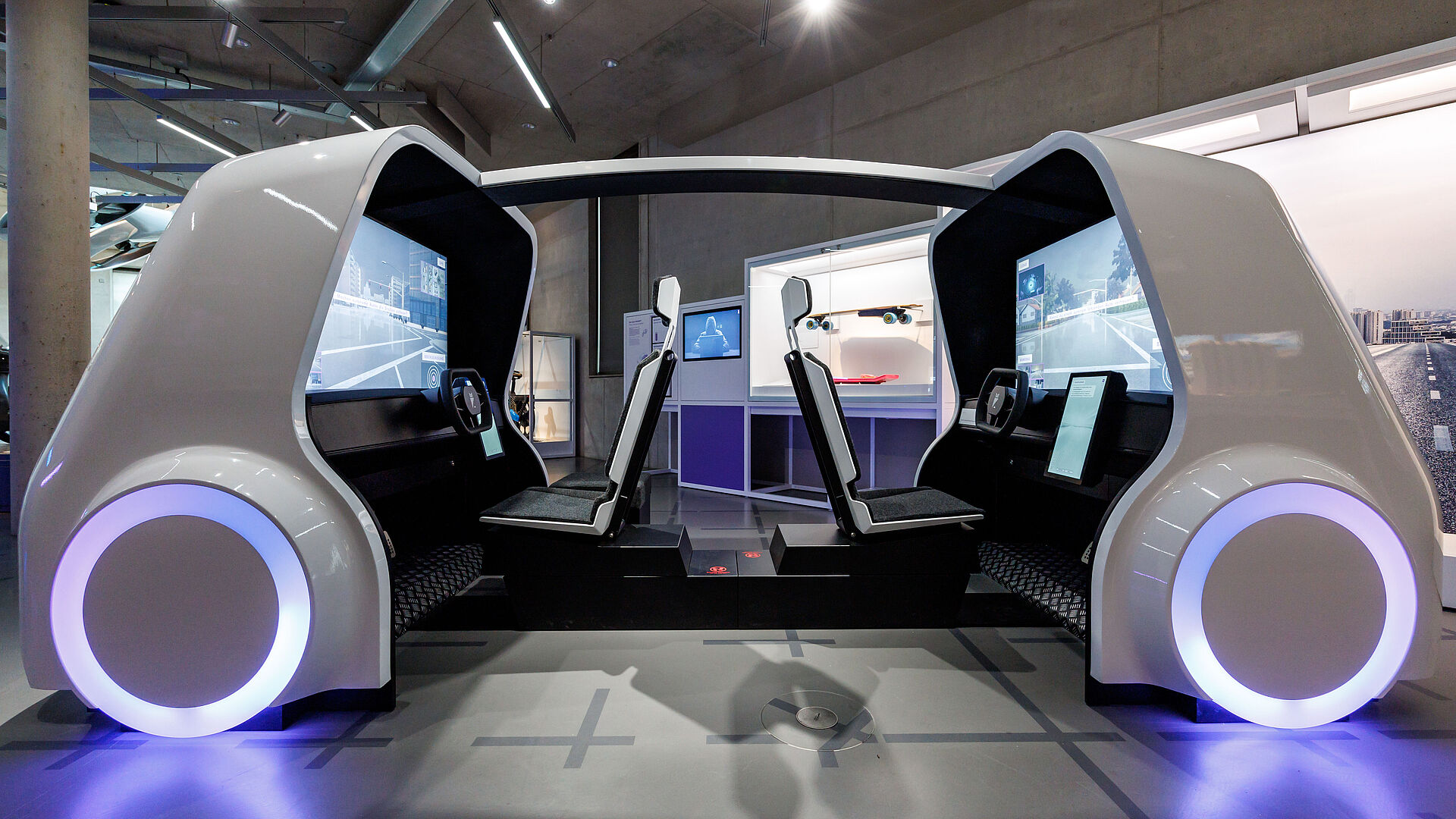
The air taxi Pop.Up NEXT floats above the exhibition, illustrating how urban mobility could one day extend from streets into the air. A driving simulator invites visitors to try both classic driving mode and AI-supported autonomous mode—allowing them to experience the difference firsthand.
Humanoid Robots & Artificial Intelligence
The humanoid robot AMECA engages visitors in conversation, demonstrating the current state of speech technology and artificial intelligence. Additional humanoid robots such as Cassandra and interactive AI systems reveal how strongly AI already influences our daily lives—from assistance systems to new forms of human-machine interaction.
Space Telescope
The space telescope is an augmented reality station that allows visitors to take a closer look at exhibits suspended in the air. Through a virtual telescope, texts and images can be accessed, making space exploration vividly tangible.
Beat the Brain: Neural Networks
The “Beat the Brain” station demonstrates how a neural network processes information. A camera recognizes toy animals placed beneath it, while a touchscreen visualizes how the data passes through different network layers, with paired animals arranged by varying levels of difficulty.
Trust
This interactive installation shows how personal data can be collected and used to imitate individuals. An AI system learns from conversations and reveals how easily digital identities can be misused.
XR & VR: Museum of the Future EXTENDED
Museum of the Future EXTENDED enhances the exhibition with immersive XR and VR experiences. A virtual moonwalk transforms a walk on the Moon into an interactive experience. Additional scenarios transport visitors to cities, laboratories, and speculative worlds, expanding and deepening the themes of the physical exhibition.
Hands-On Laboratory
In the laboratory, future technology becomes tangible. Visitors experiment with DNA, explore sustainable energy sources such as hydrogen, or design their own objects using 3D printing. The lab demonstrates how research works—and how ideas become real technologies.
Modern Architecture with a Panoramic View of the Kaiserburg
From the top floor of the modern museum building, visitors enjoy a panoramic view of Nuremberg’s famous Imperial Castle. This moment connects past and future, reminding us that many ideas for tomorrow build on what people have developed, tested, and learned throughout history.
Shop & Café
A well-stocked museum shop offers products that playfully convey knowledge and inspire new perspectives. In the ShopCafé, an automated system prepares specialty coffee.
Five Thematic Areas – The Future in Perspective
The exhibition is structured into five thematic areas, each posing concrete questions about the future:
- Work & Everyday Life – How will automation, robotics, and AI transform our professions and routines?
- Body & Mind – What role will new medical procedures, bio-implants, and exoskeletons play as body and technology become increasingly intertwined?
- System City – What will tomorrow’s cities look like when autonomous vehicles, air taxis, and smart infrastructures become part of daily life?
- System Earth – Which data and models help us understand the global climate, and which technologies can help protect our planet?
- Space & Time – How do we explore outer space, and what significance does space travel have for everyday life on Earth?
Each area combines physical objects, interactive stations, and future scenarios that encourage visitors to question, reflect, and discuss.
A Place for Dialogue: Shaping the Future Together
The Museum of the Future sees itself as a platform for dialogue. It not only presents technologies but also asks about their significance for society:
- What opportunities and risks do new technologies bring?
- Who benefits—and who might be excluded?
- How do we want to work, live, and conduct research in the future?
The exhibition connects research with emotion, interaction with reflection. Visitors interested in technology—whether experts or newcomers—are invited to take a position and develop their own visions of the future.
Contact:
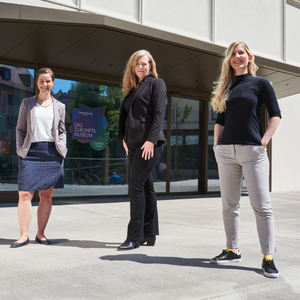
![Deutsches Museum Nuernberg Team Betrieb und Service]()
Besucherservice
Augustinerhof 4
90403 NürnbergTelephone +49 911 21548 880
Email besucherservice-dmn@deutsches-museum.deSie erreichen das Team des Besucherservices telefonisch montags bis freitags von 10 bis 14 Uhr.