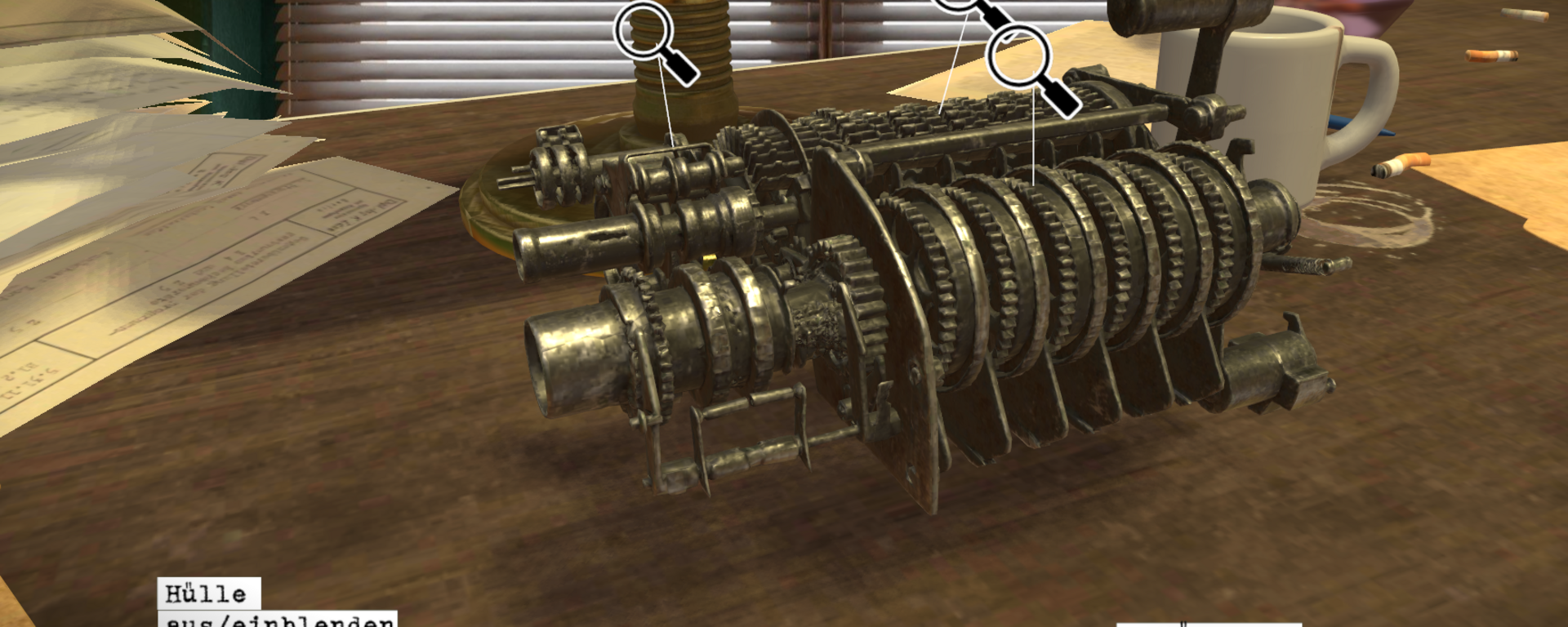
Photo: Deutsches Museum | Merlin Stadler
Digital projects
Digital spaces create new access points to the museum - the "Digital Projects" research cluster explores, curates and designs these experiences.
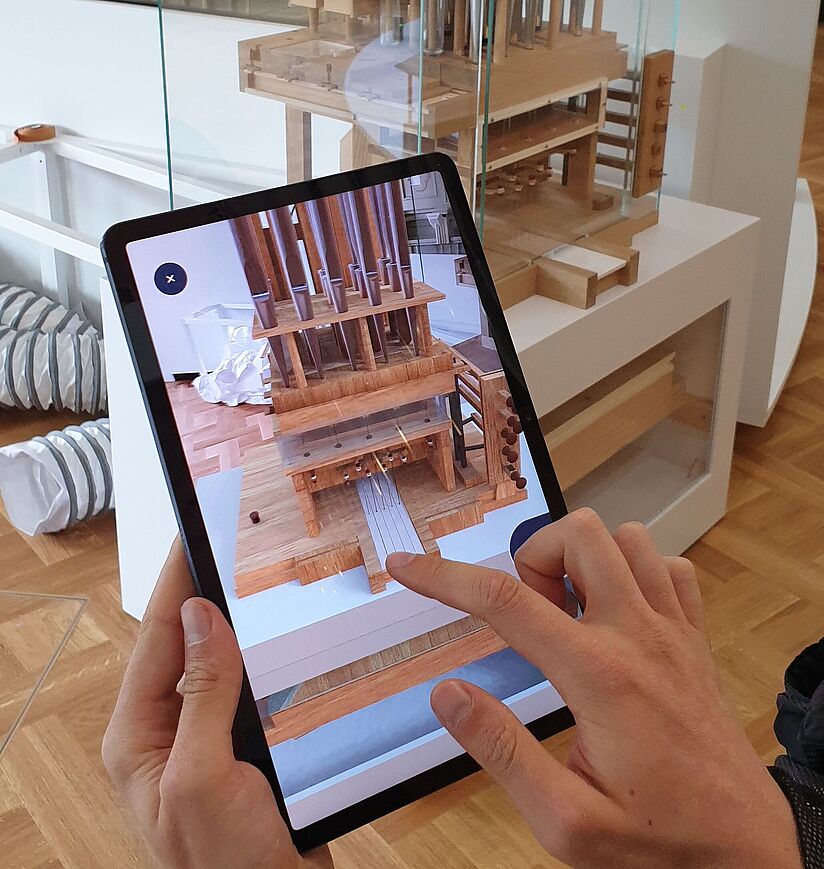
Screenshot of the VR model of the functional model of an organ in the Deutsches Museum App Photo: Deutsches Museum
Research and curating in the digital space
The “Digital Projects” research cluster is one of several research clusters that were established in 2023. Colleagues from various departments work closely together in these research clusters: The curators from the Exhibitions/Collections department, the Deutsches Museum Research Institute and, of course, the Deutsches Museum Digital department. One particular concern is to expand the traditional museum workflow - i.e. planning and organising exhibitions in the exhibition building - to include a contemporary option: digital exhibitions. This format provides the opportunity to present individual special objects as well as thematic or specialised areas for which there is currently no possibility of presenting them in an exhibition. In this way, we are creating additional spaces for communication that extend the museum beyond its physical boundaries and enrich access to our collections in the long term.
Current projects
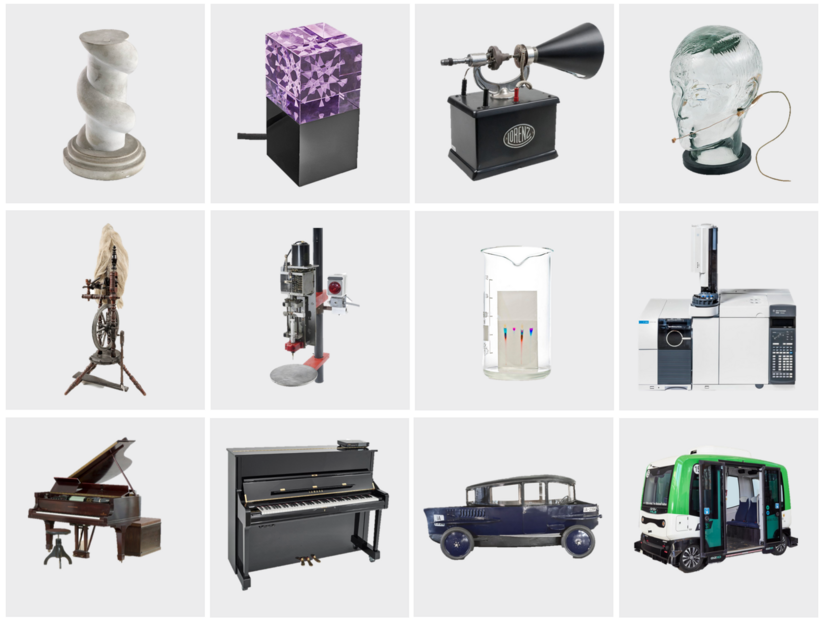
Microphones, pianos or automobiles. What we take for granted today was often revolutionary 100 years ago and may already be obsolete tomorrow. Photo: Deutsches Museum Digital
Objects in dialogue - 100 years of history of technology
A century of technology in direct comparison: historical exhibits enter into dialogue with current developments in exciting pairs of objects. The juxtaposition impressively illustrates how technical innovation has changed our world since 1925.
The Deutsches Museum's Digital Cluster has selected objects that are particularly suitable for this dialogue. The realisation as a scrollytelling webpage was developed in-house by the Deutsches Museum Digital team. Short, concise texts accompany the juxtapositions and open up new perspectives on a century of history of technology.
The project makes the diversity of the Deutsches Museum's collections visible and emphasises the importance of the technical cultural heritage that the museum has been preserving for over a hundred years.
“The challenge is clear: how can museums deliver the excitement of physical interaction with the convenience and responsiveness of digital?”
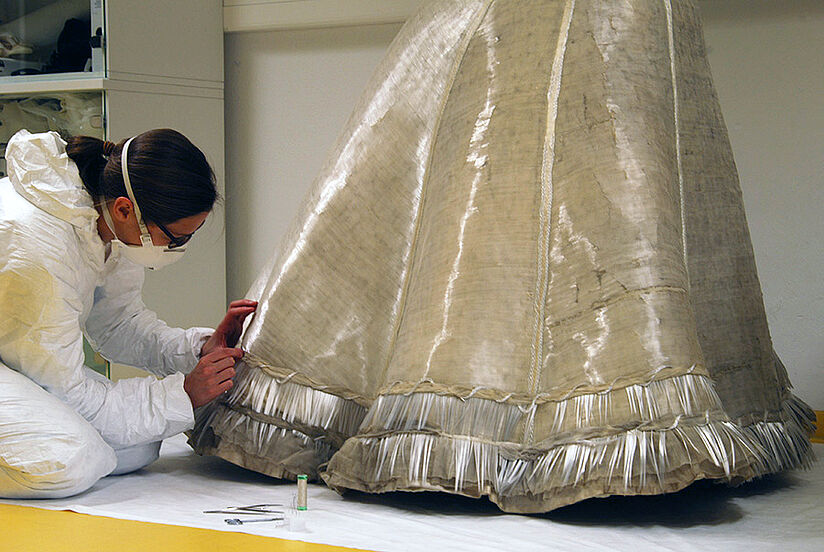
Cleaning of the fringes of the fibreglass dress by the restorer. Photo: Deutsches Museum
A digital exhibition project: The glass fibre dress - a fabric with a particular billiance
We are expanding our exhibition space with digital exhibitions. We can make exhibits accessible to the public that we are often unable to show in our exhibition rooms due to a lack of space. The so-called "glass fibre dress" is one of these exhibits in our collection, whose interesting history, social implications and technical context we want to convey, while we cannot show it in a physical exhibition space.
To create the digital exhibition space, we are providing content ranging from the history of the exhibit and its social connections to the technical context in the form of images, films, sound and texts. We create the exhibition space together with an artistic designer.
We also want to reach a digitally savvy audience. At the same time, we use the Internet to create global links to other exhibits in other museums.
The conch shell is a musical instrument originating in Japan. Photo: Neue Sammlung - The Design Museum | Neue Sammlung - The Design Museum
It’s a match – 100 Years of Design and Technology
Die Neue Sammlung – The Design Museum and the Deutsches Museum are jointly celebrating their 100th anniversary. Despite sharing a number of identical exhibits, the two institutions view their collections through fundamentally different lenses: while the Deutsches Museum focuses on technical innovation, the Design Museum prioritizes aesthetic design. Yet, where objects truly define cultural history, they hold a permanent place in both collections.
According to the motto "It’s a match" this collaboration playfully explores commonalities, contrasts, and associative connections between the objects. We invite you to discover fascinating insights into the collection histories of these two iconic Munich institutions.
Who we are and what we are planning
Meeting of the research cluster "Digital Projects". Photo: Deutsches Museum | Jana Friedel
We already digitally implementing exciting projects: For example, the unique dress made from spun glass threads of a Spanish princess, which would otherwise lie dormant unnoticed in the depot, waiting for its next exhibition. But we will also look into the possibility of preparing smaller exhibitions that are currently closed but are sorely missed by our museum guests for a digital visit - such as the former walk-in replica of the Stone Age Altamira cave. Some projects are realised jointly by the cluster, others by small teams or individual members of the cluster.
The cluster will gradually build up its expertise in the digital realisation of smaller and larger exhibition projects: What tools do we have in the museum to bring our knowledge online? How time-consuming is it to create a web-based exhibition? We will be investigating these and other questions over the coming months and years.

Contact persons
![Vorderansicht einer Person mit nach hinten gebundenem dunklem Haar; Gesicht durch einen unscharfen Kasten unkenntlich gemacht, sichtbare Ohren und Hals, sie trägt einen bordeauxfarbenen Schal mit weißen Punkten und ein dunkles Oberteil vor hellem Hintergrund.]()
Dr. Margherita Kemper
Kuratorin
Abteilung Life SciencesTelephone +49 89 2179 551
Fax +49 89 2179 99350
Email m.kemper@deutsches-museum.de