
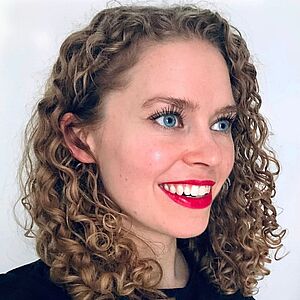
Celine Camps
ForschungsinstitutScholar in Residence
Email c.camps.ext@deutsches-museum.de
Email cc4304@columbia.edu
Zeitraum: 1. März bis 31. Dezember
The Arts of Screwmaking in the Early Modern German-Speaking Lands
Short Project Description
This project examines the arts of screwmaking in the early modern German-speaking lands. It will analyze a variety of screw-based, largely scientific, objects from the collection of the Deutsches Museum, produced between the fifteenth and eighteenth century in order to explore and map out the parallels and differences between a variety of screw-producing crafts, and better understand what skills their craftspeople may have sought to display. To do so, it will combine the material-technical analysis of screws, with their historical reconstruction, and the more traditional reading of primary and secondary sources.
This research is part of a larger dissertation project on the proliferation of screws in the fifteenth and sixteenth centuries, which explores why, how, and to what effect gold- and silversmiths, as well as instrumentmakers from the German-speaking lands increasingly developed and used screws to assemble their objects—either instead of or in addition to other fastening technologies and techniques.
Short Bio
Celine Camps is a Ph.D candidate in the history of early modern science at Columbia University in New York. Her research lies at the intersection of the history of science, technology, art, and material culture, and focuses on early modern craft. She is especially interested in the practice of metalworking in the early modern German-speaking lands.
Celine graduated cum laude from Maastricht University with a B.A. in Arts and Culture (majoring in Knowledge and Technological Culture). She holds a Master’s degree (cum laude) in the History and Philosophy of the Sciences and Humanities from Utrecht University and an M.A. and M.Phil. degree in History from Columbia University.
Before coming to Columbia, she worked at Sven Dupré’s research group Art and Knowledge in Premodern Europe at the Max Planck Institute for the History of Science in Berlin and the Huygens Institute (Royal Netherlands Academy of Arts and Sciences) in The Hague.
From 2016 to 2019, she was a participant in Pamela Smith’s Making and Knowing Project at Columbia University, as part of which she has helped transcribe, encode, and translate an anonymous sixteenth-century French technical-artisanal manuscript.
She was a member of the Renaissance Society of America’s first Graduate Student Advisory Committee and is serving as a committee member of the Early Modern Metals Research Network (EMMRN).